
Self-enquiry...
(what should or shouldn’t…you….we…they…do now?)

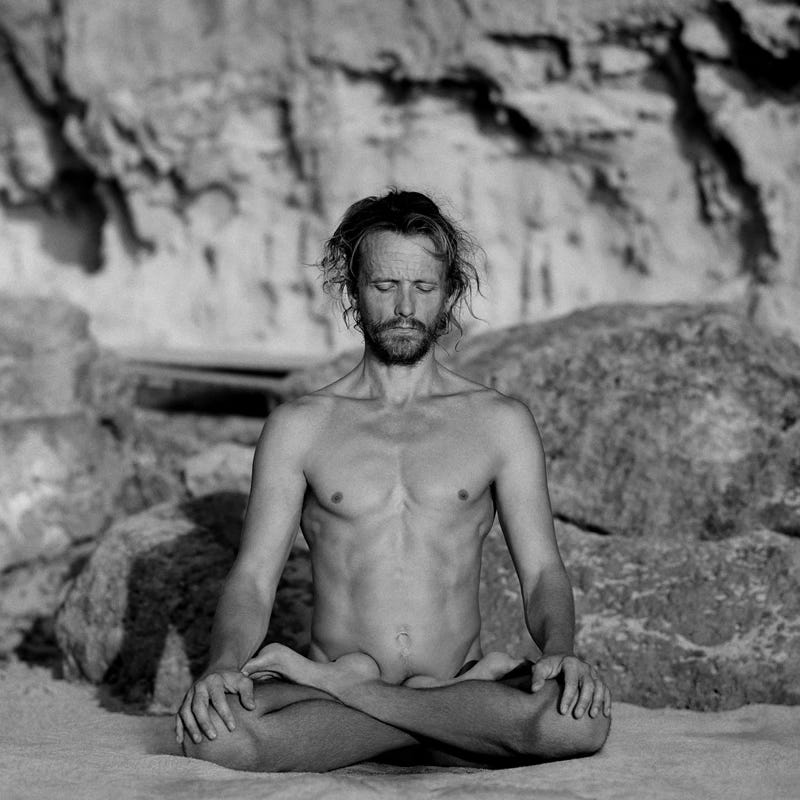
You could say that the ability to make conscious choices is what makes human beings different, and being human difficult. It could be that making choices is really the essence of being human. Let’s look at a simple action: taking a drink from a flask. Paul didn’t need to make a conscious decision to drink from his flask though sometimes we do make conscious decisions to do things like that. I’m including unconsciously selected actions in the word ‘choose’ or ‘choice’. When I open my mouth like this, and vibrate my vocal cords as air passes through, it’s very easy for people to say: “he’s chosen that word rather badly” or “he’s choosing his words rather well today” or whatever. But if you pay honest attention to your speech patterns you will have to concede that very rarely do you make a conscious choice about the words that come out of your mouth. Usually they just come out of your mouth without prior deliberation.
Very often they come out as a result of thoughts passing unconsciously through your brain. If you’ve sat in silent stillness without trying to manipulate your mind into a special state, becoming intimate with the activity of your mind, it must begin to dawn on you that the thoughts that go through your mind have a life of their own. However much you may be able to now and then shape that life, that flow a little bit. Honest observation reveals eventually that you cannot guarantee being able to choose the thought that will bring you out of meditative silence. You cannot even choose the thoughts that are running through your mind right now. Thoughts that sometimes produce words and even actions.
You’re lying in bed on Thursday 4th August 2005 and your thoughts are: “oh it’s a bit cold this morning; I’m going to go back to sleep.” Thoughts you didn’t invite, that are there because it’s cold. Then come more uninvited thoughts: “oh I’d better go to the platform; I’ve spent hundreds of euros to be here. I might as well get my money’s worth." So eventually you get up and go. It seems like you’ve done so freely because nobody has actually put a gun to your head and forced you here. But on close examination, this idea of freely choosing begins to look more and more spurious. Yet we are faced by conscious choices all the time. Every one of us always will be.
You may have heard such things as: "You can choose to be well!”, “You can choose to be healthy, happy, free.” Of course anybody is bound to choose to be well, to be happy, free. You’d be crazy to deliberately choose otherwise. Of course you’re going to choose to be happy, well and free if you can. Nevertheless, making that choice doesn’t necessarily make you happy, well or free. Now does it? Can we admit this. That telling ourselves that we can or should be happy or rich does not make us so. Although if we get fed up enough we might just start to do something about getting rich or happy. Although even that doesn’t actually work for most people.
We need to understand not only what comes before a choice but what comes afterwards. A few years ago I used to eat a lot of chocolate everyday. The inherent integrity of my body would occasionally produce a thought in my mind: “You’d better stop this Godfrey!” So I would make a choice: “Yep! I’m going to stop eating chocolate.” The next day I was eating chocolate. There doesn’t that often seem to be a correlation between a choice and its intended outcome. Sometimes there is but very often not. “I’m going to be nicer to my husband/wife/employees.” , “I’m going to be more generous to the tramps on the street”. These are the kinds of choices that people are constantly making and not experiencing them being fulfilled.
So when you say you can choose to be free, or you must choose to be free/happy, this is definitely true if you just take choice to be a simple verbal process in the brain or in the mouth: “I choose to be well/happy/free.” Anybody can do that. So although there is a relationship between what we do and the process of deliberately choosing, it’s not necessarily what we’ve been led to believe. Although it is certainly the impression we get.
We get this impression that we make free choices all the time because of the cortex, because we have such sophisticated machinery inside our skull. Because the cortex is so rich in its possibilities of association, and of simulation. It can imagine all sorts of things that are not actually happening. It can remember things, anticipate things, even totally invent things. Of course this is a great gift. This is not inherently a problem. But just as a sharp knife can provide nourishment in the hands of a cook, it can also provide pain and suffering. Likewise the cortex.
If a cat finds itself in miserable circumstances, it leaves: it goes somewhere else. It doesn’t sit there for weeks and months pondering whether it ought to, whether it would be the best and right thing, whether anybody would be upset with it or reject or misunderstand it. It just gets the fuck out of there and finds somewhere it can be warm and get some food. But human beings, because of their cortex, can’t behave with the freedom of a cat because we can imagine all kinds of consequences, and all kinds of imaginable course of actions.
When we’ve made a choice to do something that doesn’t lead to what we wanted, it is really easy to say: “Fuck I shouldn’t have done that.." It would be a very rare or dishonest human being who could say that they have never had such a thought. There was a Catholic here last week who has a real problem being comfortable with the sensations her body produces: especially the nice, warm, woozy ones. She feels guilt very easily. Of course this is not exclusive to Catholics Any kind of behavioural code supposedly designed to secure some benefit, is an invitation to feeling guilty when you don’t manage to follow it. But guilt’s not too much of a problem. We all have loads of it but we still can get to work. We still can draw money out of a machine in the wall.
So what is the problem of saying: “I shouldn’t have done that"? There’s not such a big problem until you change the pronoun to: “he/she/they shouldn’t have done that”. Then very soon the Twin Towers are not standing. Very soon millions of Jews have been slaughtered in death camps because they shouldn’t be allowed to exist. Why? Because they shouldn’t be like that, because they shouldn’t look like that, think like that, act like that. They shouldn’t have such sharp eyes, dark skin, big buttocks. All of a sudden this tendency to say “shouldn’t have” looks a bit more dangerous than it does at first glance. These are, in fact, very, very dangerous words: “should have done” and “shouldn’t have done”.
Faced everyday, every hour that we’re awake, by the need to make choices, we find that most of them do bring about more or less the outcome that we intended. You put the key in the ignition and the car starts over and over again. It’s very rare the car doesn’t start. Hopefully. Let’s say you decide to clean your teeth. You just clean them. This is happening so often, so consistently, that it’s almost impossible not to be left with the impression that conscious choices are made by humans freely. But this is only an impression. Which doesn’t mean that we don’t make free choices: of course we do. Happening all the time. We’re making what we call ‘choice’, what we call ‘freely’ all the time.
Why am I doing this with my stick? Well maybe it’s to dissipate the huge amount of energy that happens to normally reside in this organism: for this some movement is necessary. Just holding this stick deals with some of it and then moving it releases more. So, is this being done freely? At first glance you’d have to say: “Yes, of course Godfri’s freely moving his stick across the mat”. But actually he’s not. He’s driven to move it across the mat so as to stay calm whilst talking about these contentious and much misunderstood things.
I don’t care wether you, or I, or Kant, or Hume, believes in free will. This is, as far as I’m concerned, irrelevant. What is relevant to me is: how do human being feel and how do they relate to each other on the basis of how they feel? Take that bloke over there with dark skin. If I don’t like people with dark skin, maybe I’m going to be rude to him, get rid of him, make him feel so uncomfortable being in my presence that he will fuck off and never bother me again. This is how people behave, isn’t it?
This is what I’m concerned with. Not academic arguments about whether a table has any existence before a human being looks at it. Or: does time really exist or is it just an impression created in the cortex? I’m not trying to belittle these questions. But these kinds of questions don’t bother most people, not deeply enough for people to dedicate their lives to them.
But there is a question that all human beings are faced with and it’s this question that self enquiry can answer most deeply: what am I supposed to do now? What should I do now? This is the fundamental human question. This is not the fundamental question of being a cat, elephant or tree. This is the fundamental question of being human. It’s the most asked question and it’s the one that creates a need for an answer more instantly than any other. You can ask yourself: ‘what’s the meaning of time?’ You don’t need to answer it today do you? You can wait a little bit. But if you ask yourself: ‘What should I do now?’ you have to answer it now. And you are always asking yourself that and answering it also, even if unconsciously. Michelle just asked herself, unconsciously or consciously: “should I drink some more water now?” Answer came: “Yes I should."
This is a question that life is constantly asking of us. Shall I go to Italy, or not? Shall I practice, or not? Shall I do Tai Chi or yoga? Shall I eat chick peas, or lentils? Shall I eat rice or quinoa? When you string these questions one after another, they don’t seem to have any particular significance. But what happens if somebody you love stops loving you? Then it becomes a more significant question: what the fuck should I do now? Or if you lose your job: what the hell am I going to do now? But it’s the same fundamental question. What is the next action that I can take that will make me as ok as possible? And it is on that basis that we answer all of these questions. We answer all of these questions so that we can become as ok as possible for as long as possible. And this is actually an organic imperative arising from your cells. Every cell in your body needs to be ok, it needs to have enough liquid, salt, heat etc. If it doesn’t it feels uncomfortable, and then you start to feel uncomfortable.
But you’re not just an agglomeration of cells are you? You’re a human being. You also need physical contact, verbal contact. You need to be understood, to be recognised, to be seen, heard, loved. These are all imperatives, these are not neuroses. We need to eat, to sleep, to be warm; but we also need to be touched, seen, heard, understood, loved. When we become deprived of all these things, then we realise that we need them. But because we’re never totally deprived of them we can think: “Well I don’t really need to be heard, to be seen, to be loved.” But try it for two years being neither loved, seen or heard.
You know what happened to the Masai warriors when put into a prison: they died within days. Not of any disease, they just died because they have no sense of time and they think they’re there forever, in that strange environment where there isn’t a tree or a rustle of wind or a reebok to be seen. So they die. Can you imagine that the Buddha would have been perfectly happy to have never been heard or understood. You can only imagine that. It’s your fantasy. It has nothing to do with what actually happened. The Buddha was understood. The Buddha was heard. The Buddha was deeply loved and still is.
When we ask ourselves the question: “What should I do now?”, the asking of the question implies a choice, that we must select between options. But this is nothing more than that: an implication, an impression created by the cortex and the narrowing of our attention onto our need and its fulfilment. “What should I do now? Should I marry him? Should I divorce her? Should I go and eat or sit here a little longer?” The pressure to resolve the question narrows our attention so much that we become unable to see actually where the question arose from, where the answer will arise from and where the answer will lead to.
If you’re in a football crowd at the wrong end wearing the wrong colours and somebody kicks you in the ankle and breaks it, you’re quite likely to be angry. And if you don’t want to get the rest of the shit kicked out of you, you’re going to have to curtail the rest of your testosterone response effectively, because you’re surrounded by dedicated shit-kickers and you’re wearing the wrong colour. But if you’re walking up this mountain and you slip and break an ankle, it’s not the same, is it? You may not even get angry at all. You might just be in pain, a little upset, a bit worried that you might not be able to get down. So a similar condition in your ankle can produce totally different reactions and responses according to who or what you think is responsible.
If you think that there’s something called ‘free choice’ or freewill, you’re more likely to be angry. That’s small scale. But larger scale, like the Twin Towers being blown up with thousands of people being killed, is the same process: “these fucking murderous heathens”. Now believe me I totally sympathise with Osama Bin Laden’s interpretation of American culture. But it doesn’t make me so angry that I want to blow up the victims of it. For that’s what we are, victims as much as perpetrators of the evils of the civilisation we so ostentatiously enjoy. Is it possible to not participate in your own personal Twin Towers, in your own acts of vengeance, in your own indulgence of blame. Including self blame or guilt.
We don’t have to make the kinds of choices that George Bush or Osama Bin Laden makes in terms of their socio-political impact. Nevertheless, we actually make the same kinds of choices all the time. And we make them in exactly the same way that both of them make theirs: according to the forces impinging upon us through the circumstances, external and internal, within which we find ourselves. All of our choices, that we appear to make so freely, along with all of those choices that happen unconsciously, are the result of a specific configuration of internal and external circumstances meeting in that moment. A configuration of circumstances which extends back and out in time and space further than you can ever find a beginning or an end to.
Seeing this doesn’t take away the need to freely make choices, it doesn’t take away the fact that those choices were made in a particular brain. Nor that those choices made in that particular brain produce particular actions in a particular body, and that particular body and brain bears your name therefore conventionally speaking they are your actions. They cannot be said to be anybody else’s. Yet, at the same time, they had to happen like that. They had to happen like that because the network of causation, the network of conditions, that brought them about already existed and impinged upon that moment of that decision exactly as it did. To turn round afterwards and say: “I shouldn’t have done that!“ is meaningless. Except for its ability to produce guilt and blame. Just as to say “I didn’t do that is absurd. You did, i didn’t. Simple as that. It’s the doing that’s not so simple. The instrument is beyond doubt.
To say “I/he/they/we should not have done something” is pure speculation. It’s not true, it’s wishful thinking, it’s fantasy. The truth is that you did what you did, you said what you said and so did everybody else. This is what I mean by truth. I’m not seeking to define absolute truth. I’m just telling you now what I mean by truth. Truth is what we can all agree upon if we’re honest and open. It is true that we are, each one of us, upon this platform. This is what I mean by truth. This is what I don’t mean by truth: “Well actually we’re really butterflies dreaming that we’re human beings and that this can be proved by Chuang Tzu if you listen to him carefully.”
It’s true that my stick just came down upon the mat. It is not true that it might not have done. That is not truth, that is speculation, fantasy, invention. That is an expression of the human brain’s capacity to imagine, that’s all. It has nothing to do with actuality, that it didn’t have to have, according to imaginable speculations. But it did. And it’s going to do it again now, I think (thump!). Now this stick is on the mat. To say: “It doesn’t have to be on the mat” is pure speculation. To say: “You could lift it up” is pure speculation. Because to lift it up I need to intend to. I have to choose to. And if I don’t intend to, if I don’t chose to it will not lift up no matter how much you can argue: “But it could be up, you could choose to lift it up.” I’m not going to lift it up until I choose to. No amount of speculation can make me lift it up. Now I’m going to lift it up.
Some of you may like poetry. Well here is my favourite poetic opening, from the Four Quartets by TS Eliot.
‘Time present and time past are both perhaps contained in time future and if all time is eternally present then all time is eternally unredeemable. What could have been, what might have been remain always a perpetual possibility only in a world of speculation. What might have been and what has been point always to one end which is now.’
You could say this is the technical part of the poem and the rest takes you off into different levels of your sensibility to invite you to understand the implications of that opening, perhaps the most profound and potentially liberating opening of any poem. The use of the word ‘if’ and ‘perhaps’ is very, very clever. By using ‘if’ and ‘perhaps’ you don’t have to disagree, you just have to consider the flow of the words and take their implications freely without having to give up your cherished belief in free will. What TS Eliot is saying is that only what happened, happened. What did not happen did not happen. To say that it could or should have happened is to move away from truth, from reality, into a realm of perpetual possibility that is pure speculation and irrelevant. It does not change what is actually happening. It does not change the now. What is actually happening is actually happening because what actually happened before it actually happened. What actually did not happen before it actually did not happen.
Because that which is actually happening is actually happening. I’m actually lifting up my stick again. What is actually happening is actually not a matter of opinion, whether it’s observed or not, whether it’s understood or remarked upon or not. What is actually happening is actually happening and it’s actually happening as a result of things that happened beforehand. This beforehand goes back as far as you can imagine time extending and beyond the limits of your imagination. The past happened in exactly the way that it happened and that is the way that it happened. The past did happen in exactly the way that it happened. The past did not happen in any way slightly differently from the way that it happened. This is so obvious isn’t it? The past happened the way that it happened. And because the past happened exactly the way that it happened, the present is happening exactly the way that it’s happening.
Of course, this does not mean that things are not going to change. Of course they are, and we can participate in those changes according to our desires, attachments, preferences, intentions and choices. But what is happening, what has happened, can not be changed. You have to be able to hear this clearly, and then see it clearly, and not just give it over to your belief systems and its need to uphold itself.
If you manage that then guilt and blame can stop bothering you, even if they pop up now and then. But you will still desire to change things, to make the world fit your preferences, attachments, desires more snugly. I mean we’re human beings after all, we can’t seem to help but be arrogant. Its not just actors and footballers who are arrogant is it. Its presidents, priests, imams, and yoga teachers too. Arrogant enough to act as if we can make the world in our own image, and that everyone else should participate in that. It would be hilariously funny if it were not so fucking tragic.
Self enquiry is an invitation to clarify the true nature of choice making, to clarify the true nature of actions, to see their conditioned nature. To create such a big space in you that you stop blaming anybody, whether it’s yourself, your father, mother, lover, children, employer, teacher. It doesn’t mean that all of a sudden you like them all. It certainly doesn’t mean that all of a sudden you like everything that they do and say or that you enjoy it. It just means you see its conditioned nature without being afraid of the implications of that word ‘conditioned.’
You are being conditioned right now by the wind, sun, turning of the earth, my voice, the words that I speak. You’ve got little idea quite how you’re being conditioned and you’re all being conditioned uniquely. To be human is to be constantly undergoing conditioning, to be constantly changing, responding to circumstance, changing your understanding, your body temperature, attitude, behaviour. You’re conditioned by the food you eat, by the sounds that you hear, by everything.
Everything affects you. You are a hypersensitive organic radar system being conditioned. You’re not just a radar though. You’re not just perceiving like a radar. You’re also an action potential configuration. You’re always expressing the implications of what you perceive. You’re moving this way or that, at this speed or that, with this intention, or that.
There’s no doubt that it feels good to be healthy and strong. There’s no doubt that it’s useful to be able to concentrate. There’s no doubt that many, if not all, the things that can be given to you by the methodologies of self improvement are beneficial and it feels good to have them. But I doubt whether any of them are as fruitful as freedom from the weight of blame and guilt, which comes necessarily, inevitably as a result of seeing clearly the conditioned nature of all choices, all actions and all perceptions. But you wont see this clearly, you won’t enjoy the gift of a light heart, if you just stay cosy with your unproven and unprovable belief in freewill.